Top Signs You Need Garage Door Service — Don’t Ignore These
The grinding noise your garage door has been making for six months isn’t the door “warming up”—it’s a roller bearing that’s been running dry in our salt air, and it’s about three weeks from seizing a track and bending your carriage. Many homeowners in Jacksonville Beach get so used to their garage door’s quirks that they stop noticing the warning signs. We’ve seen countless situations where a small, ignored issue turned into a major, costly repair simply because the homeowner didn’t recognize the symptoms. Don’t let your garage door’s groans, squeaks, or jerky movements become a full-blown emergency.
The Symphony of Sounds: What Your Garage Door is Trying to Tell You
In Jacksonville Beach, the constant hum of the ocean and the salty air can take a toll on mechanical systems, and your garage door is no exception. We’ve learned to identify what each sound means, and they’re rarely just background noise. A consistent grinding or scraping sound, especially when the door is moving, is often a sign of worn-out rollers or tracks that are out of alignment. This isn’t just annoying; it puts immense stress on the entire system, including the opener, and can lead to bent tracks or even a derailed door.
Squealing or high-pitched whining usually points to a lack of lubrication or worn-out springs. In our coastal environment, salt and humidity can dry out lubricants quickly, and metal components can corrode. Ignoring this squeal means you’re letting metal rub against metal, accelerating wear and tear. A popping sound, particularly from the spring system, is a serious red flag. This often indicates a spring is nearing its breaking point or has already begun to fray, and it’s a situation that requires immediate attention for safety reasons. We’ve seen springs snap completely, which can cause the door to fall rapidly.
Finally, a rhythmic clunking, especially as the door moves up or down, can signal loose hardware, a failing roller, or even an issue with the opener’s chain or belt. These aren’t just minor annoyances; they’re direct signals that components are failing and could lead to a complete breakdown. Paying attention to these specific sounds can help you catch problems early, saving you from more extensive repairs here in Jacksonville Beach.
Uneven Movement and Tilting: A Dangerous Imbalance
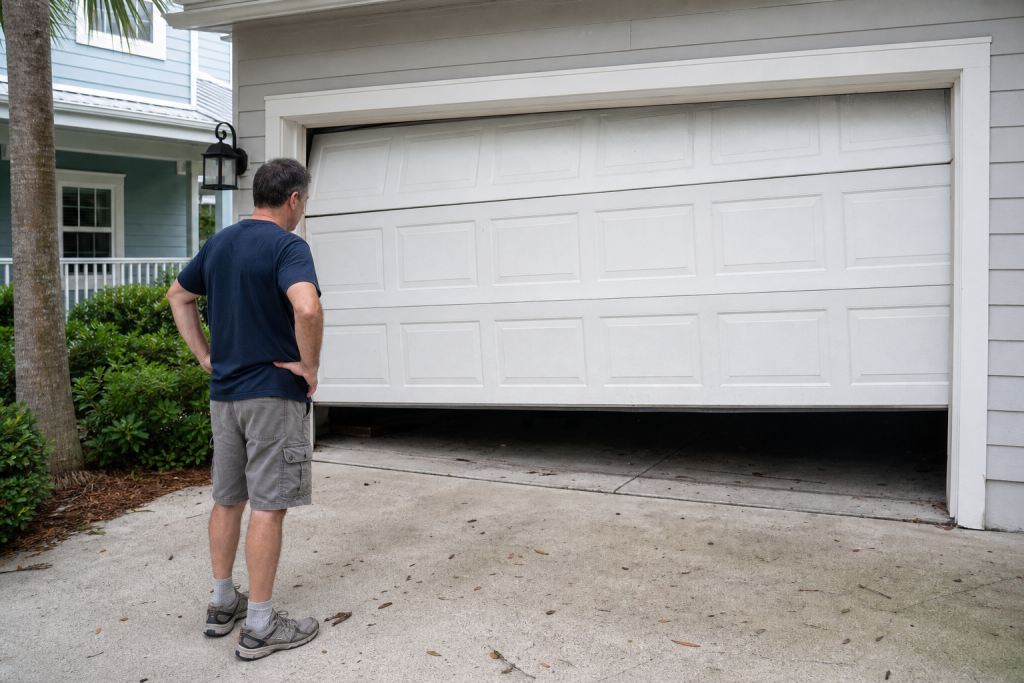
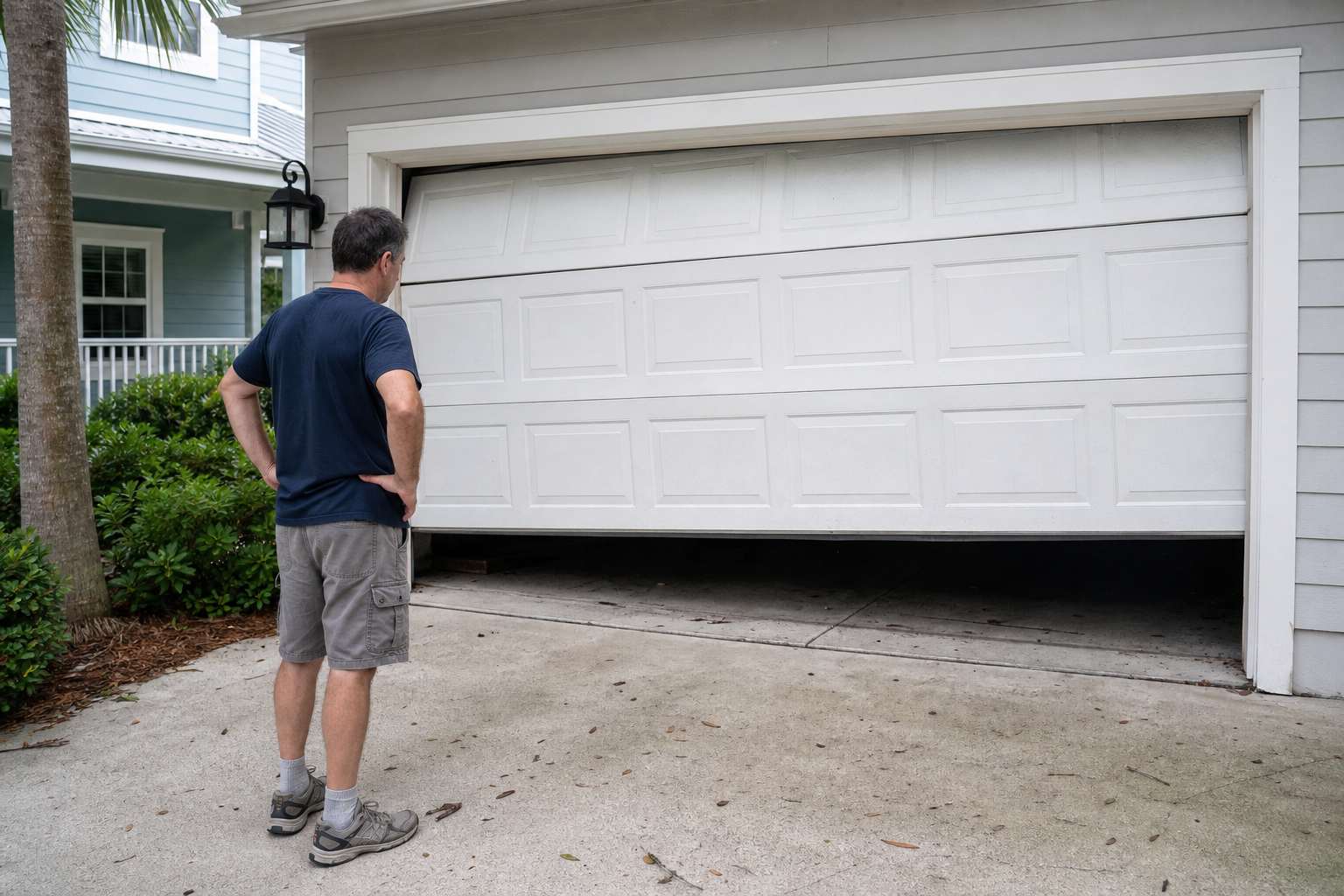
When your garage door travels up or down, it should do so smoothly and evenly, staying relatively level. If you notice your door tilting significantly to one side, or if it moves in a jerky, uneven fashion, it’s a strong indicator of a cable or spring tension problem. These are critical safety components, and when they’re not working in sync, the door is operating under dangerous stress.
The cables on either side of your garage door are designed to lift and lower it in perfect balance. If one cable is frayed, snapped, or has slipped off its drum, the door will lean heavily. This puts an incredible amount of strain on the remaining cable, the torsion spring (if you have one), and the tracks. A door that tilts is one cycle away from a catastrophic failure where a cable could snap completely, causing the door to crash down unexpectedly. We’ve responded to emergencies in neighborhoods like Pablo Creek and Beaches Historic District where a tilted door led to significant damage.
Visually inspecting the cables is crucial. Look for any signs of fraying, unraveling strands, or excessive rust. On the cable drums, which are located at the ends of the torsion spring shaft, you might see rust streaks if the cables are corroding internally. This is a specific warning sign we see often in Jacksonville Beach due to the salt in the air, indicating that the metal’s integrity is compromised, even if the cable looks okay on the surface. If your door is consistently unbalanced, it’s not a minor inconvenience; it’s a serious safety hazard that needs professional assessment.
The Opener’s Struggle: Is It the Opener, or the Door?
Many homeowners assume that if their garage door opener is struggling, the opener itself must be the problem. However, we often find that the opener is simply working overtime to compensate for mechanical issues with the door itself. If your opener is making unusual noises, seems to be straining, or is slow to respond, before you consider replacing it, check the door’s balance and the condition of its hardware.
For instance, if your door is heavy due to failing springs or has misaligned tracks, the opener will have to exert much more force to lift it. This can lead to burnt-out motor gears, broken drive belts or chains, and premature wear on the opener’s internal components. Replacing an opener on a mechanically unsound door is like putting a new engine in a car with seized-up wheels – it won’t solve the root problem and is essentially wasted money.
A simple test can help differentiate between an opener issue and a door issue. First, disconnect the opener from the door using the emergency release cord (usually a red handle hanging from the opener’s trolley). Then, try to lift the door manually. If it’s extremely heavy, difficult to move, or won’t stay open on its own, the problem lies with the door’s balance and hardware, not the opener. We’ve seen this scenario play out time and again in Jacksonville Beach, where homeowners spent hundreds on new openers only to discover the real culprit was a worn-out spring system.
The 60-Second Safety Test: Checking Your Door’s Balance
One of the most critical, yet often overlooked, safety checks you can perform on your garage door takes less than a minute. This test helps you understand if your door is operating within safe parameters or if it’s masking a serious imbalance that could lead to injury or damage. This is particularly important for doors from brands like LiftMaster, Chamberlain, Genie, Clopay, Amarr, Wayne Dalton, Craftsman, and Raynor, as even the most reliable brands can suffer from wear and tear.
Here’s how to do it:
- Locate the emergency release cord on your garage door opener. This is typically a red rope or handle hanging from the trolley mechanism that moves along the opener rail.
- Pull the cord down and toward the opener motor. This will disengage the opener from the door, allowing you to move it manually.
- Gently lift the garage door by hand. It should lift smoothly and with moderate effort.
- Once it’s about halfway open, let go of the door.
A properly balanced door should stay put at this halfway point, or drift very slowly up or down. If the door slams shut immediately, or if it’s so heavy you can barely lift it, your springs are likely failing or are improperly tensioned. If it flies open rapidly, the springs are over-tensioned. This imbalance puts immense strain on all components, including the opener, and is a serious safety concern. We often perform this test for clients in areas like Atlantic Beach and Neptune Beach when they report opener issues, only to find the door itself is the primary problem.
Jacksonville Beach Specific Warning: Rust Streaks and Salt Air Corrosion
Living in Jacksonville Beach means embracing the beautiful coastal environment, but it also means being aware of how salt and humidity affect your home. For garage doors, this translates to a higher risk of corrosion, especially on metal components. One of the most telling, yet often missed, signs of trouble is visible rust streaking.
Pay close attention to the area around your torsion spring assembly, which is typically mounted above the garage door. Look for rust-colored streaks running down from the spring shaft, the spring itself, or the cable drums where the lift cables wrap. This isn’t just surface rust; it often indicates that the metal components inside are corroding. Salt air can penetrate even seemingly intact surfaces, leading to internal degradation that isn’t immediately apparent.
Similarly, check the lift cables for signs of rust or flaking. If you see rust streaks on the tracks or anywhere along the door’s path, it’s a sign that moisture and salt are a significant factor. While you can wipe away surface rust, the underlying corrosion can weaken the metal, making it more susceptible to breaking under tension. This is a common issue we address for homeowners throughout Jacksonville Beach, Ponte Vedra Beach, and St. Augustine, and it’s a clear signal that the door’s internal components are compromised and need expert inspection and likely replacement.
The Bottom Line
Your garage door is a complex piece of machinery that works hard every day. Ignoring the warning signs—unusual noises, uneven movement, opener strain, or even visible rust—can turn a minor issue into a major, expensive repair or a dangerous situation. By understanding what these signs mean, you can proactively address problems before they escalate.
If you’re in Jacksonville Beach and noticing any of these symptoms, don’t wait for a complete breakdown. Neighborhood Garage Door Service Jacksonville Beach offers free estimates to diagnose and fix any issues your garage door might be experiencing. Call us today at (904) 637-8137.
Frequently Asked Questions
What does a grinding noise from my garage door mean?
A grinding noise from your garage door typically indicates worn-out rollers or tracks that are out of alignment, or it could signal a problem with the opener’s drive mechanism. In Jacksonville Beach’s salty air, dry bearings and corrosion are common culprits that accelerate this wear.
Can I fix garage door spring issues myself?
We strongly advise against attempting to fix garage door spring issues yourself. Garage door springs are under immense tension and can cause serious injury or death if mishandled. This is a task best left to experienced professionals like our team at Neighborhood Garage Door Service Jacksonville Beach.
How often should I lubricate my garage door?
In a coastal environment like Jacksonville Beach, it’s advisable to lubricate your garage door’s moving parts (rollers, hinges, springs, and opener chain/belt) at least twice a year. Using a silicone-based spray lubricant is generally recommended. However, if you hear squeaking or grinding between lubrication cycles, it’s a sign that more significant issues may be present.
My garage door opener isn’t working, is it the opener or the door?
It’s often difficult to tell without inspection. If the opener motor hums but doesn’t move the door, or if the door is very heavy to lift manually after disengaging the opener, the problem is likely with the door’s balance (springs, cables) or its tracks, rather than the opener itself. We can help you determine the root cause.
Reviewed by Tony Vikowsky, Owner & Lead Technician at Neighborhood Garage Door Service Jacksonville Beach, serving Jacksonville Beach since 2004.
Need Garage Door Help?
Call Neighborhood Garage Door Service Jacksonville Beach — licensed & insured, available 24/7 in Jacksonville Beach.
(904) 637-8137